
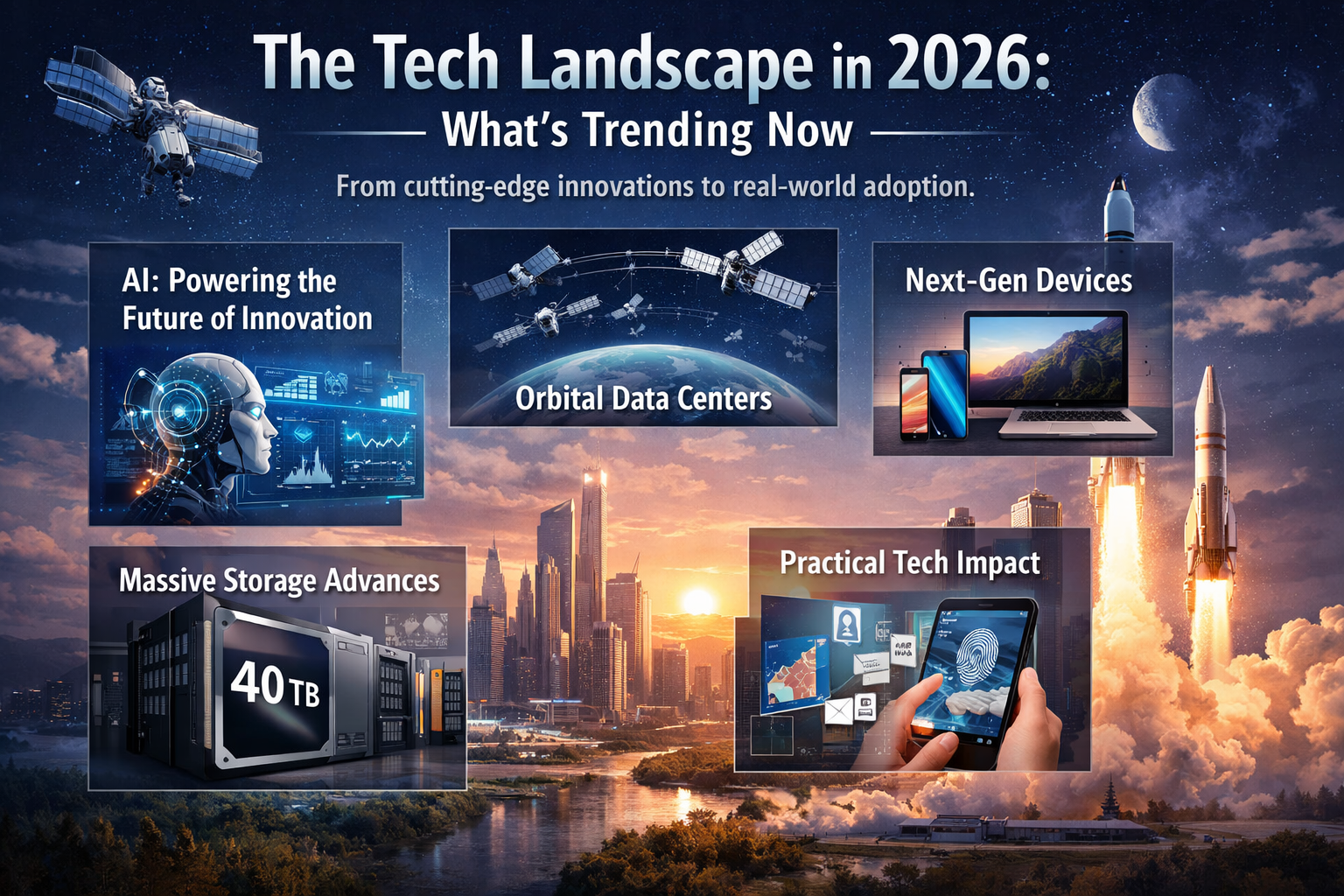
As 2026 unfolds, technology is evolving at an unprecedented pace. Innovations that once seemed experimental are now becoming part of everyday life, transforming how businesses operate and how people interact with digital systems. From artificial intelligence and space-based infrastructure to next-generation consumer devices and data storage breakthroughs, this year marks a turning point where advanced technology moves from concept to large-scale, real-world adoption.
1. AI: Powering the Future of Innovation
Artificial Intelligence continues to be the central force in technology this year. Businesses and startups are moving beyond experimental AI tools toward enterprise-grade deployments where AI makes real-time decisions, orchestrates systems, and delivers outcomes without constant human intervention. This marks a clear shift from theoretical use cases to measurable, real-world impact.
Strategic partnerships and massive investments are accelerating this growth. Collaborations worth tens of billions between major AI firms are expanding computing capacity and enabling advanced applications across healthcare, finance, cloud analytics, and automation.
2. AI and Space: Orbital Data Centers
Technology companies are exploring space-based data infrastructure, where satellites act as floating data centers supporting AI workloads and global connectivity. SpaceX and other organizations have proposed large satellite constellations, opening the door to distributed computing beyond Earth. While the concept holds significant promise, it also raises challenges related to regulation, space sustainability, and security.
3. Next-Generation Devices on the Horizon
Consumer technology companies are preparing for major hardware launches in 2026.
Apple is expected to introduce new products such as the iPhone 17e, iPads powered by the A18 chip, and next-generation Macs. These devices are likely to offer improved performance, better energy efficiency, and deeper AI integration.
Samsung has teased its Galaxy S26 lineup, highlighting advancements in camera technology, particularly in zoom capabilities and low-light video performance.
Together, these developments show that smartphones and tablets are becoming increasingly intelligent, blending AI seamlessly into everyday user experiences.
4. Storage Breakthroughs: Massive Drives Ahead
Western Digital has announced a 40 TB enterprise hard drive using advanced recording technology, with plans to scale up to 100 TB drives by the end of the decade. These high-capacity storage solutions are critical for data centers, cloud service providers, and AI training platforms that require large volumes of data at lower costs.
5. Practical Technology Making an Immediate Impact
Not all technological advancements are futuristic; many are already improving daily life.
In India, the latest Aadhaar app update allows users to digitally update their home address, making government services more accessible and efficient.
In enterprise and event management sectors, AI-driven planning and analytics tools are enhancing operational efficiency and improving user experiences.
Broader Trends Defining 2026
Autonomous AI and Real-Time Systems
AI systems are evolving from tools that generate insights to autonomous decision-makers embedded within business operations. Industries such as manufacturing, retail, and logistics are using these systems to respond faster, reduce errors, and improve resilience.
Centralized, AI-Ready IoT Networks
Connected devices and intelligent IoT networks are becoming standard across industries. These systems enable centralized data analysis, predictive maintenance, and seamless automation from sensors to cloud platforms.
Advanced Robotics and Quantum Computing
Humanoid robots and early commercial quantum computing platforms are gaining traction. Robotics is expected to support labor-intensive industries such as manufacturing and warehousing, while quantum computing is beginning to solve complex simulations and optimization problems that were previously impossible.
Final Thoughts: Technology in 2026
Technology in 2026 is defined by deep AI integration, data-driven infrastructure, and user-focused innovation. From next-generation devices and massive storage systems to space-based computing and smarter enterprise tools, this year represents a major transition from experimental innovation to widespread real-world adoption. Staying informed about these trends will be essential for developers, entrepreneurs, and technology enthusiasts navigating the evolving digital landscape.
#Technology, #TechTrends, #FutureOfTech, #Innovation, #DigitalTransformation, #ArtificialIntelligence, #AITrends, #MachineLearning, #AutonomousSystems, #SmartTechnology, #Tech2026, #FutureReady, #NextGenTech, #EmergingTechnology, #NextGenDevices, #CloudComputing, #BigData, #DataCenters, #StorageTechnology, #SpaceTech, #OrbitalComputing, #SatelliteTechnology, #QuantumComputing, #Robotics, #TechStartups, #Developers, #SoftwareEngineering, #TechInnovation